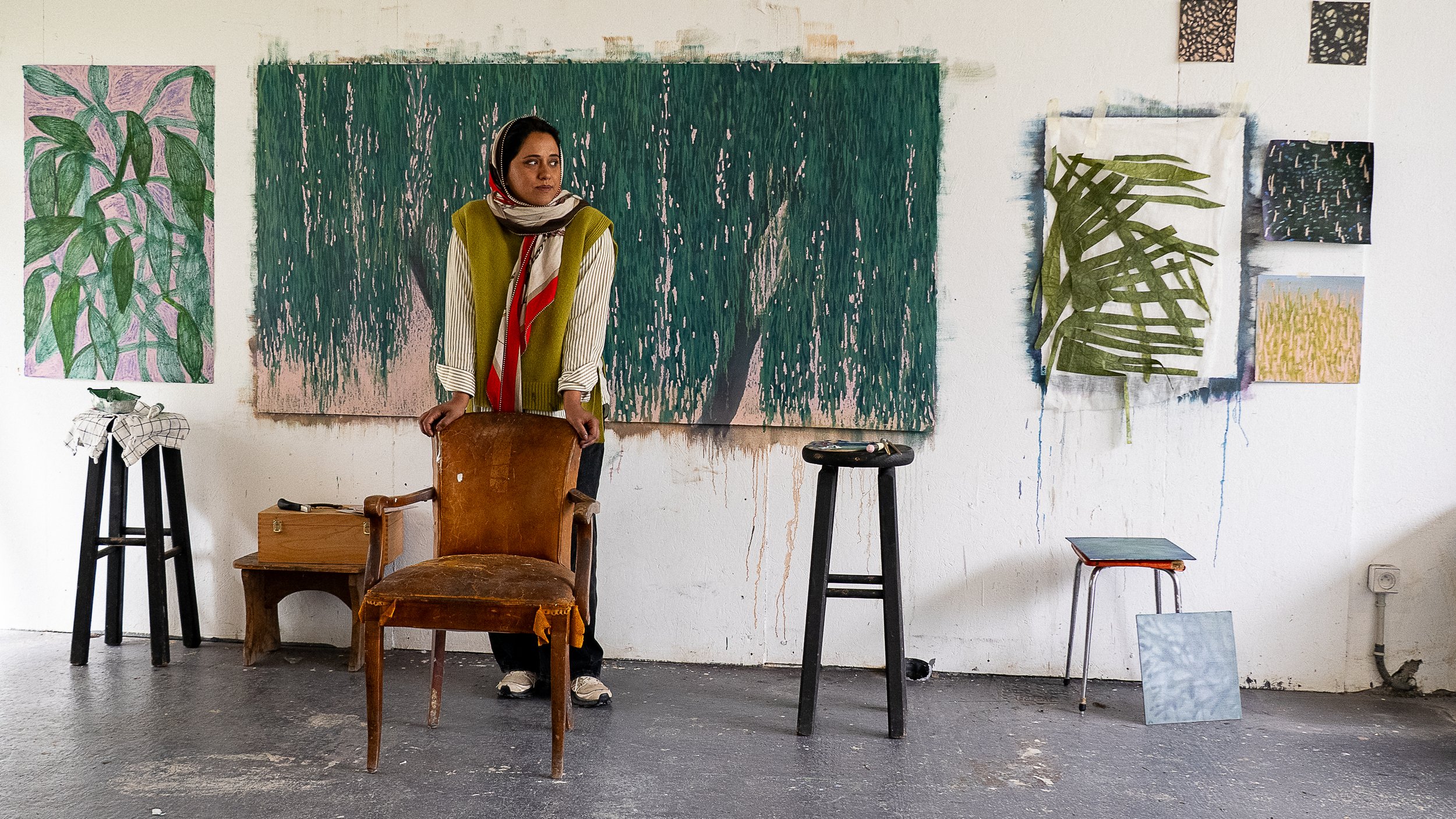
Alia Zaal is a visual artist based in Abu Dhabi and Dubai whose work explores memory, perception, and the emotional resonance of images.
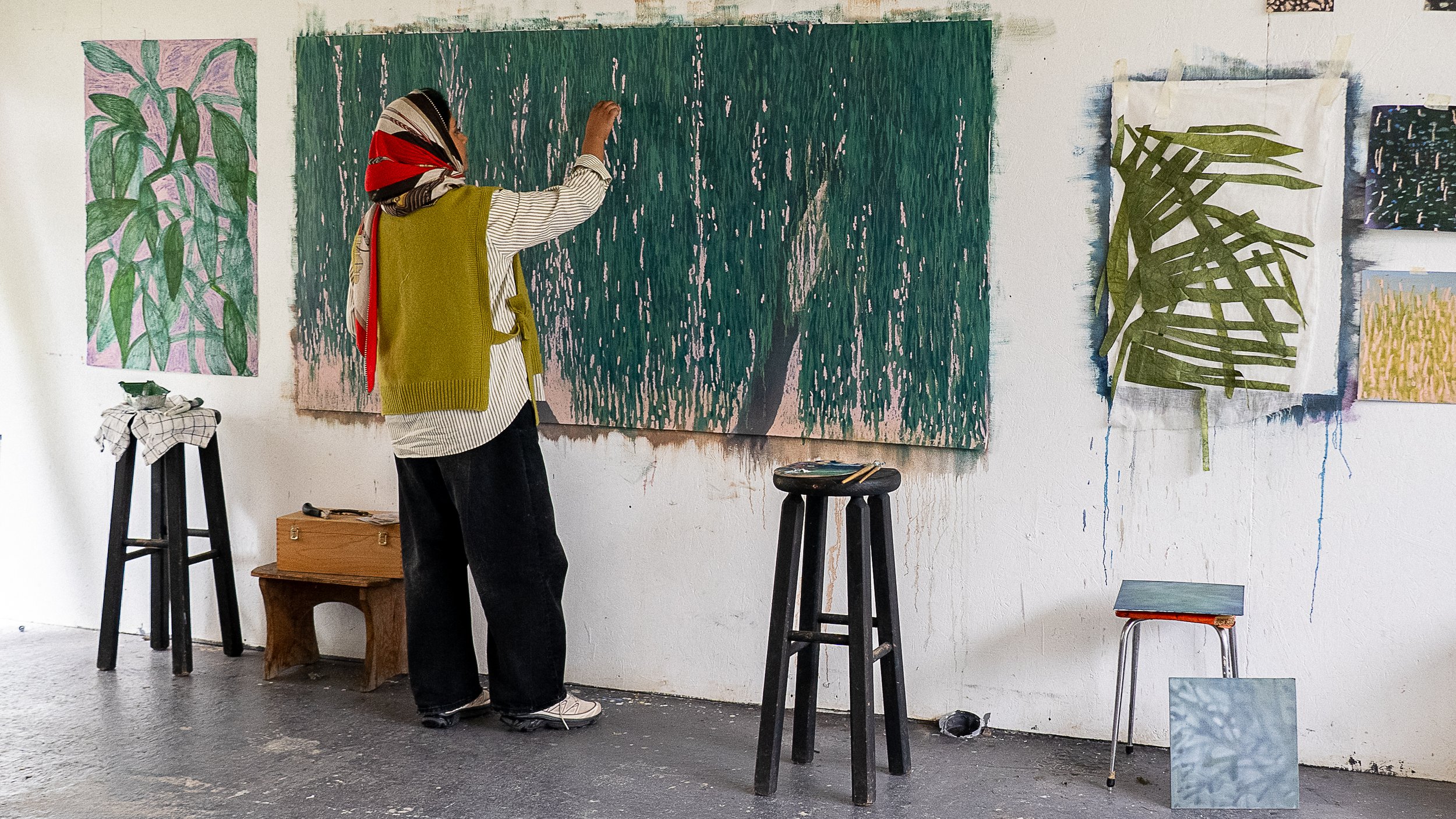
Her practice moves fluidly between painting and photography, often beginning with found photographs sourced from archives or personal collections. These images are transformed through layers of distortion, repetition, and reworking, becoming fragmented reflections of lived experience rather than fixed representations. Working across multiple media, Alia Zaal investigates how images carry emotional weight and how they shift through memory, translation, and time. Her paintings often emerge from photographic references, but through the process of painting, they become altered, abstracted, and atmospheric, existing somewhere between documentation and imagination. Influenced by visual culture and cinematic language, her work engages with themes of memory and perception. Through recurring gestures, layered surfaces, and a sensitivity to light and atmosphere, she creates spaces where images appear suspended between recognition and transformation. Her work draws from both personal and collective memory, questioning the reliability of visual information while exploring the psychological dimensions of seeing. Rooted in experimentation and material exploration, Alia Zaal’s practice reflects an ongoing dialogue between image and interpretation, where painting becomes a way of translating what photography cannot fully contain. Her work is shaped by an interest in how images circulate and persist, as well as by the tension between visibility and obscurity. Across her practice, she approaches image-making as an act of reconstruction, where memory, sensation, and perception continuously overlap and evolve.
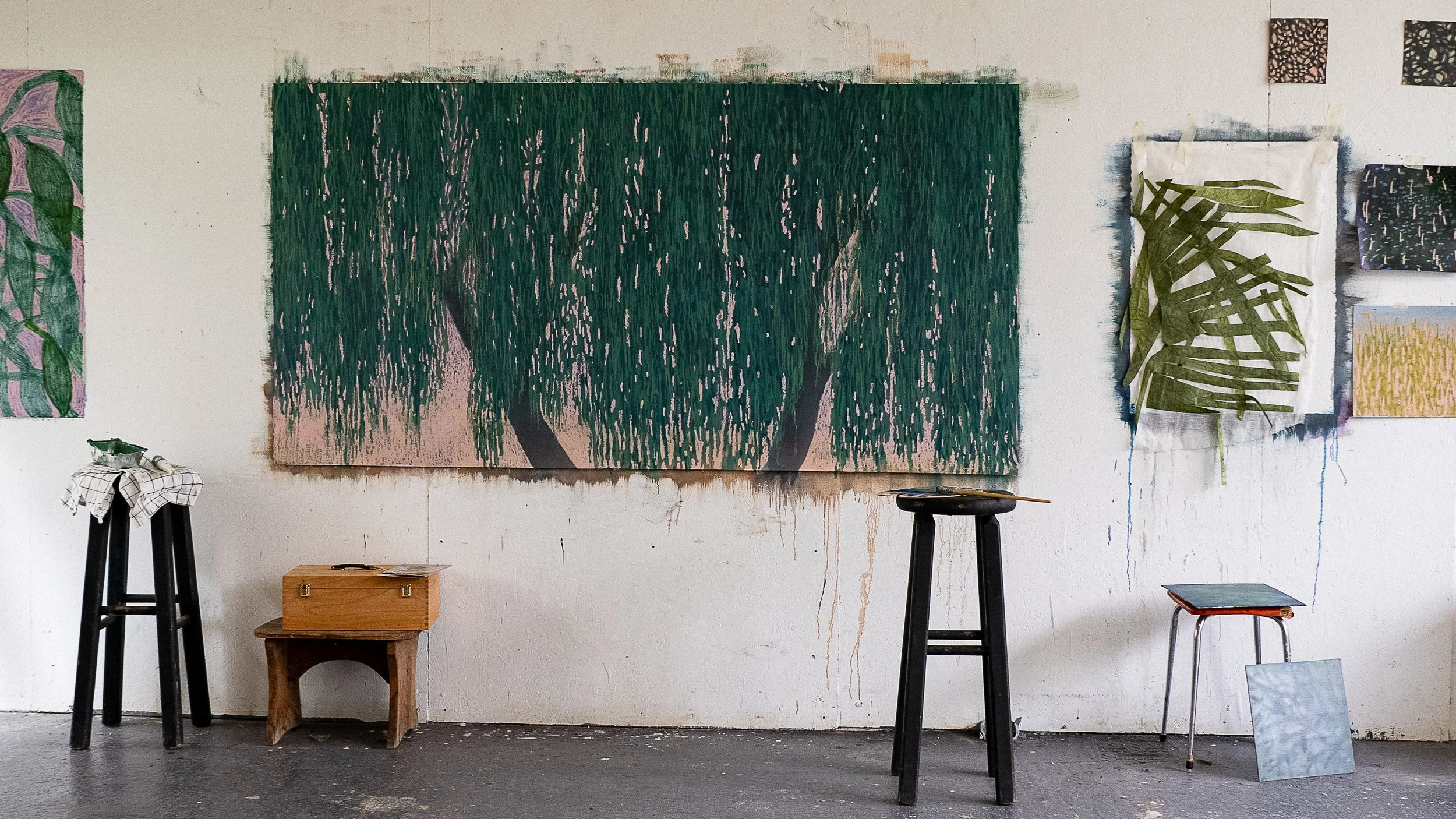
During her 2021 residency at Claude Monet’s house in Vétheuil, Alia Zaal began painting landscapes and observing how perception changes with shifts in light, atmosphere, and place. It became increasingly clear to her that certain forms and landscapes carry a familiarity across different countries and environments, such as the resemblance between the ghaf tree and the willow tree. This creates a sense of confusion between place and memory, where what is physically present merges with images already stored in the subconscious. Through this process, she became drawn to scenes and landscapes that felt globally familiar: palm trees encountered during her residency in Biarritz at Villa Mathilde, golf courses, or street lamps at night, casting light through surrounding foliage. These recurring images become part of an evolving visual language gathered from different places she inhabits or spends time in, including Dubai, Abu Dhabi, Vétheuil, and Biarritz. By returning repeatedly to specific landscapes and observing them over time, she creates multiple versions of what she sees, allowing memory, atmosphere, and subconscious associations to shape the final work. Her paintings emerge through an intuitive process in which images are released and allowed to evolve freely into their own form.